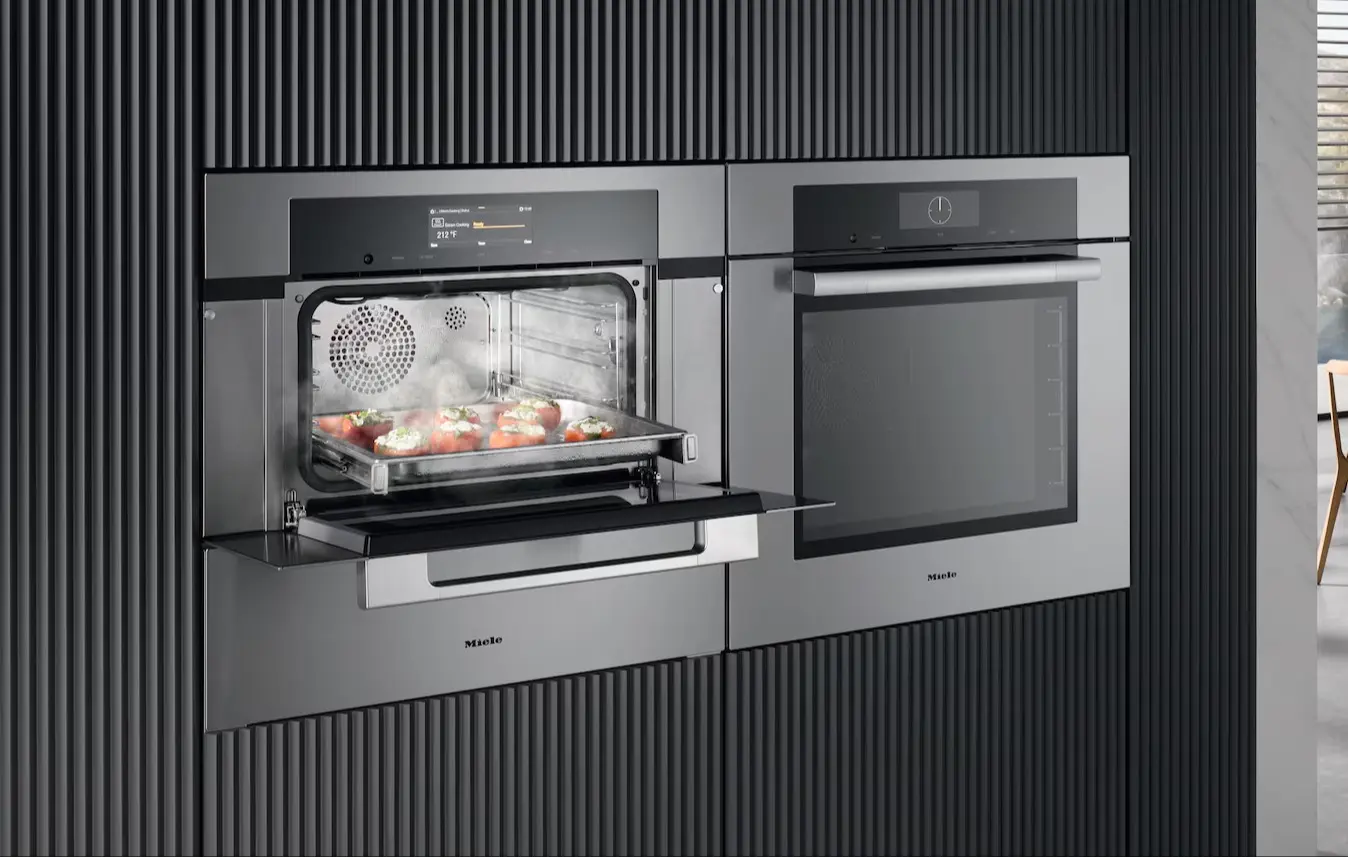
For NYC homeowners investing in a luxury kitchen, premium wall ovens and steam ovens are the heart of culinary performance. These high-end appliances deliver precise temperature control, advanced cooking technologies, and professional-grade results that standard ovens simply cannot match. With prices ranging from $3,000 to over $12,000, selecting the right model matters. In this guide, we examine leading brands, their key features, and common issues that owners face.
Why Choose a Premium Wall Oven or Steam Oven?
Premium wall ovens differ from standard models in several important ways. They’re engineered with advanced convection systems, intuitive controls, and innovative cooking technologies that bring restaurant-quality results to your home kitchen. A quality premium wall oven provides:
- True European convection with precise, even heat distribution
- Multiple cooking modes (often 10-17+) for versatile meal preparation
- Steam cooking capabilities for healthier, more flavorful results
- Guided cooking programs that automate time and temperature
- Temperature probe monitoring for perfect doneness every time
- Wi-Fi connectivity and smart home integration
- Self-cleaning systems including pyrolytic cleaning
- Sleek designs with flush installation options for modern NYC kitchens
Understanding Oven Types
Convection Wall Ovens
Traditional wall ovens with fan-assisted heating that circulates hot air for even cooking. Premium models feature dual convection fans and multiple heating elements for superior results. Ideal for everyday baking, roasting, and broiling.
Steam Ovens
Pure steam ovens cook food using moisture only, preserving nutrients, color, and texture. Perfect for vegetables, fish, and reheating without drying out food. Available in plumbed (water line connection) and non-plumbed (reservoir tank) versions.
Combi-Steam Ovens
The most versatile option, combining convection heat with steam for the best of both worlds. Cook with dry heat, pure steam, or a combination. Excellent for bread baking, roasting meats with crispy exteriors and juicy interiors, and sous-vide cooking.
Speed Ovens
Combine microwave technology with convection cooking to dramatically reduce cook times. Function as a microwave, convection oven, or both simultaneously. Ideal as a secondary oven for busy households.
Premium Brand Overview
Miele — Intuitive German Engineering
Miele has led the industry in oven technology since introducing touch controls in 1978. The German manufacturer produces almost all components in-house at their single factory, ensuring exceptional quality and reliability. Miele pioneered the MasterChef guided cooking system that makes complex cooking simple.
Key Features:
- M Touch display—high-resolution touchscreen with intuitive swipe controls
- MasterChef automatic programs—hundreds of presets that set time and temperature automatically
- Moisture Plus—adds steam bursts during conventional cooking for better browning and moisture
- DualSteam technology—distributes steam evenly from both sides of the oven
- Wireless roasting probe—monitors internal temperature without cord management
- PerfectClean enamel interior—non-stick surface for easy cleaning
- SoftOpen and SoftClose doors—gentle, quiet operation
- Miele@home app connectivity for remote monitoring
Available Sizes: 24″ and 30″ wall ovens; combi-steam ovens in 24″ and 30″
Price Range: $4,500 – $8,500+ (wall ovens); $5,500 – $7,500+ (combi-steam)
Warranty: 2 years full
Ideal For: Home cooks who want technology to simplify cooking without sacrificing control. MasterChef is the most approachable guided cooking system available—just select your dish, and the oven handles the rest.
Gaggenau — Professional Precision for Serious Cooks
Gaggenau represents over 300 years of German engineering excellence. Now owned by BSH (Bosch/Siemens), Gaggenau is designed for experienced cooks who want total control. Their 400 Series ovens offer up to 17 heating modes and precise one-degree temperature adjustments—more customization than any competitor.
Key Features:
- 17 heating modes including baking stone, rotisserie, and dough proofing
- One-degree temperature precision (vs. 5-degree increments on most ovens)
- Three-point temperature probe with automatic shut-off and time estimation
- Pyrolytic self-cleaning at 905°F—racks can stay inside
- Heated catalyzer filters grease and odors from oven air
- Side-swing doors opening to 180° for easier access
- Rotisserie spit included in larger models
- Baking stone option with dedicated heating element reaching 550°F
- Save up to 50 custom recipes in the control system
- Home Connect smart integration
Available Sizes: 24″ and 30″ wall ovens; combi-steam ovens in 24″ and 30″
Price Range: $5,000 – $11,000+ (wall ovens); $6,500 – $9,000+ (combi-steam)
Warranty: 2 years full
Ideal For: Experienced cooks and culinary enthusiasts who want professional-level control. Gaggenau steam ovens offer five humidity levels and temperatures up to 450°F—the most precise steam cooking available for home use. Not recommended for beginners due to the learning curve.
Wolf — American Performance with Guided Simplicity
Wolf, part of the Sub-Zero Group family, is the top-selling luxury cooking brand in the U.S. Manufactured in Wisconsin, Wolf combines American durability with sophisticated technology. Their wall ovens come in two series: the flagship M Series with advanced Dual VertiCross convection, and the E Series offering excellent value with guided cooking features.
Key Features:
- Dual VertiCross convection—two vertical blowers with dedicated heaters for even cooking on all racks
- Gourmet Mode—nearly 50 presets that automatically adjust time and temperature
- 10 cooking modes including Convection Roast, Proof, Dehydrate, and Stone
- Temperature probe with Gourmet Mode integration
- Largest capacity ovens in the premium category (5.1 cu. ft.)
- Fast preheat using all heating elements simultaneously
- Color touchscreen with iconic red knob options
- Three design styles: Professional, Transitional, and Contemporary
- Wi-Fi enabled via Sub-Zero Group Owner’s App
Available Sizes: 24″ and 30″ wall ovens; convection steam ovens in 24″ and 30″
Price Range: $4,000 – $8,500+ (wall ovens); $5,000 – $7,000+ (steam ovens)
Warranty: 2 years full, 5 years limited
Ideal For: Home cooks who want reliable performance with helpful automation. Wolf’s Gourmet Mode takes the guesswork out of cooking while still allowing manual control when desired. Pairs seamlessly with Sub-Zero refrigeration and Cove dishwashers.
Thermador — Value and Versatility
Thermador, also owned by BSH, offers premium performance at more accessible price points. Built in the U.S. with German engineering standards, Thermador is known for its popular “1-2-Free” rebate program and extensive configuration options including side-swing doors and combination wall ovens.
Key Features:
- True Convection with third element for even multi-rack cooking
- Up to 16 cooking modes including Air Fry capability
- Super Fast Preheat—reaches temperature in as little as 7 minutes
- Multi-point meat probe for precise internal temperature readings
- Professional-grade rotisserie for up to 12-pound roasts
- Theater lighting that dims on/off when door opens and closes
- SoftClose hinges preventing door slamming
- Side-swing door option for easier access at higher mounting positions
- Home Connect app integration
- Star-K Sabbath Mode certification
Available Sizes: 30″ wall ovens; steam and convection ovens in 30″
Price Range: $3,000 – $6,500+ (wall ovens); $5,000 – $7,000+ (steam/combination ovens)
Warranty: 2 years full
Ideal For: NYC homeowners who want premium features at a more accessible price, especially those purchasing a full kitchen suite. Thermador’s rebate program can include a free dishwasher with qualifying purchases. Best configuration options including side-swing doors for space-constrained kitchens.
Brand Comparison Summary
Miele
Best for: Guided cooking & steam technology
Convection: True European with Moisture Plus
Steam: DualSteam, plumbed or reservoir
Price: $$$$
Standout features: MasterChef programs, M Touch display, wireless probe
Gaggenau
Best for: Precision control & serious cooks
Convection: 17 heating modes
Steam: 5 humidity levels, 450°F max
Price: $$$$$
Standout features: One-degree precision, rotisserie, baking stone
Wolf
Best for: Reliable performance & capacity
Convection: Dual VertiCross system
Steam: Convection steam ovens
Price: $$$$
Standout features: Gourmet Mode, 5.1 cu. ft. capacity, fast preheat
Thermador
Best for: Value & configuration options
Convection: True Convection with third element
Steam: Steam & convection combos
Price: $$$
Standout features: 7-min preheat, side-swing doors, rebate program
How to Choose a Premium Wall Oven
1. Size and Configuration
- 24-inch: Compact option for smaller NYC kitchens; works well as a secondary oven or steam oven
- 30-inch: Standard size fitting most cabinet configurations; largest cooking capacity
- Single vs. Double: Double ovens offer flexibility but require more vertical space
- Combination: Pair a convection oven with a steam oven, speed oven, or microwave
2. Installation Considerations for NYC
- Electrical requirements: Most require 220/240-volt dedicated circuit; verify your building’s capacity
- Plumbed vs. reservoir steam: Plumbed steam ovens need a water line—easier in new construction; reservoir tanks work in renovations
- Flush vs. proud installation: Flush mounting sits level with cabinetry for a modern look; requires precise cabinet work
- Ventilation: Some high-end ovens include built-in catalyzers; check your building’s requirements
3. Cooking Style Considerations
- Guided cooking (Miele, Wolf): Best for those who want technology to help—automatic programs handle time and temperature
- Manual precision (Gaggenau): Best for experienced cooks who want total control over every variable
- Balanced approach (Thermador): Good features without complexity; intuitive for most users
- Steam importance: If you cook vegetables, fish, and bread frequently, invest in quality steam technology
4. Key Features to Consider
- Convection type: Dual-fan systems (Wolf VertiCross, Gaggenau) offer the most even multi-rack cooking
- Temperature probe: Essential for roasting; wireless probes (Miele) offer more flexibility
- Self-cleaning: Pyrolytic cleaning (high heat) is most effective; steam-assisted is gentler on components
- Smart connectivity: Useful for remote preheating and monitoring; all premium brands now offer Wi-Fi
- Door style: Side-swing doors are easier to access at higher mounting heights
Common Problems and Solutions
Problem #1: Oven Not Heating or Not Reaching Temperature
Symptoms: Oven fails to preheat, takes too long to reach temperature, or never gets hot enough.
Possible Causes:
- Temperature sensor malfunction — sensor touching oven wall or out of position
- Heating element failure — element not glowing red (electric) or igniter weak (gas)
- Calibration drift — oven temperature no longer matches set temperature
- Door seal damage — heat escaping through worn gasket
- Control board issue — electronic malfunction preventing proper operation
- Tripped thermal switch — safety feature triggered after self-clean cycle
Solutions:
- Verify temperature sensor is positioned at 90° angle, not touching oven walls
- Check that heating elements glow orange/red when heating; replace if damaged
- Use an oven thermometer to verify actual temperature; recalibrate if needed (most ovens allow ±30° adjustment)
- Inspect door gasket for cracks, tears, or debris; replace if worn
- Reset thermal switch (if present) by pressing the red button on the back of the unit
- If control panel is unresponsive, disconnect power for 60 seconds to reset
Problem #2: Uneven Cooking or Hot Spots
Symptoms: Food browns more on one side; inconsistent results between racks; some items burn while others are undercooked.
Possible Causes:
- Convection fan malfunction — fan not spinning or running at wrong speed
- Blocked airflow — pans too large or positioned against walls
- Incorrect rack position — food too close to heating elements
- Improper preheating — starting cooking before oven reaches temperature
- Dark pan usage — dark pans absorb more heat and cook faster
- Heating element issue — one element not working properly
Solutions:
- Ensure convection fan is operating; listen for the fan sound when convection mode is selected
- Allow 2 inches of space around pans and between pans and oven walls
- Use the recommended rack position for each cooking mode; center food when possible
- Always allow full preheat before placing food in oven; watch for preheat indicator
- Reduce temperature by 25°F when using dark or glass bakeware
- Rotate pans halfway through cooking if uneven results persist
Problem #3: Steam Oven Issues
Symptoms: No steam production, water not draining, error messages, or steam leaking.
Possible Causes:
- Empty reservoir — water tank needs refilling (non-plumbed models)
- Clogged water inlet — mineral deposits blocking water flow
- Drain blockage — debris preventing proper drainage
- Scale buildup — hard water deposits affecting steam generator
- Door seal failure — steam escaping from worn gasket
- Steam generator malfunction — component failure requiring service
Solutions:
- Check and refill water reservoir; use distilled water to prevent mineral buildup
- Run the descaling cycle regularly—monthly in NYC due to hard water
- Clean the drain area and remove any debris; run a steam-clean cycle
- Use manufacturer-recommended descaling solution for deep cleaning
- Inspect door gasket for damage; steam requires a tight seal
- If steam generator fails, contact authorized service technician
Problem #4: Self-Clean Cycle Issues
Symptoms: Self-clean won’t start, oven won’t heat after self-clean, door locked after cycle, or burning smell.
Possible Causes:
- Door not fully latched — safety interlock preventing cycle start
- Tripped thermal switch — overheating protection activated
- Door latch stuck — mechanism jammed in locked position
- Excessive residue — heavy buildup creating smoke and odors
- Control board overheating — electronics damaged by extreme heat
Solutions:
- Ensure door is completely closed and latched before starting self-clean
- Wait 30-60 minutes after self-clean for oven to cool; door should unlock automatically
- If door remains locked, turn off power for 15 minutes, then restore and try again
- Wipe out heavy spills before running self-clean to prevent excessive smoke
- Use shorter self-clean cycles (2-hour vs. 4-hour) for light cleaning
- If thermal switch trips repeatedly, have technician check for overheating issues
Problem #5: Control Panel or Display Problems
Symptoms: Display blank or flickering, buttons not responding, error codes appearing, or settings not saving.
Possible Causes:
- Power supply issue — loose connection or tripped breaker
- Software glitch — temporary malfunction in electronic controls
- Control board failure — electronic component damage
- Touchscreen calibration — touch controls misaligned
- Control lock enabled — child safety feature activated
Solutions:
- Verify power connection; check circuit breaker (double breaker for 240V ovens)
- Perform a hard reset: turn off breaker for 60 seconds, then restore power
- Check if control lock is enabled; hold the lock button for 3-5 seconds to disable
- Update firmware via Wi-Fi if available; some issues resolved by software updates
- Note any error codes and consult owner’s manual or manufacturer support
- Control board replacement requires professional service
Problem #6: Door Issues
Symptoms: Door not closing properly, heat escaping, hinge stiff or squeaking, or glass cracked.
Possible Causes:
- Worn hinges — springs weakened or hinges damaged
- Debris in hinge area — food or residue blocking movement
- Damaged gasket — seal cracked or misaligned
- Misaligned door — door crooked on hinges
- Thermal stress — glass damaged from extreme temperature changes
Solutions:
- Clean hinge areas to remove any debris blocking movement
- Check hinge springs; replace if broken or worn
- Inspect gasket for damage; replace if cracked or hardened
- Realign door if needed; consult manual for adjustment procedure
- Never place cold items on hot oven glass; replace cracked glass immediately
Maintenance Tips for Longevity
Regular Maintenance (Monthly)
- Wipe interior surfaces — remove food residue with damp cloth after oven cools
- Clean door glass — use non-abrasive cleaner; clean between glass panels if accessible
- Inspect door gasket — check for cracks or food debris
- Descale steam ovens — run descaling cycle monthly in NYC’s hard water
- Clean water reservoir — empty and wipe out after each use
Quarterly Maintenance
- Run self-clean cycle — use shorter cycle for light cleaning to extend oven life
- Check temperature accuracy — verify with oven thermometer; recalibrate if needed
- Inspect racks and accessories — clean and check for damage
- Deep clean steam oven — use manufacturer-recommended descaling solution
Best Practices
- Use appropriate cookware—never use foil directly on oven bottom
- Allow proper airflow around pans for even cooking
- Wipe up spills when oven is cool to prevent baked-on residue
- Use distilled water in steam ovens to minimize scale buildup
- Run steam oven empty occasionally to clear the system
- Don’t slam oven doors—use SoftClose feature if equipped
- Keep temperature probe clean and properly stored
When to Call a Professional
- Oven not heating after basic troubleshooting
- Error codes that persist after reset
- Burning smell or visible sparks
- Gas smell (gas ovens)—turn off immediately and evacuate
- Door won’t unlock after self-clean cycle
- Control panel unresponsive after power reset
- Steam oven not producing steam despite proper water supply
- Any issues involving electrical connections
Important for NYC Homeowners: Premium wall ovens from Miele, Gaggenau, Wolf, and Thermador require technicians familiar with these specialized brands. Many NYC brownstones and pre-war buildings have unique electrical configurations that require careful installation planning. Always verify your building’s electrical capacity before purchasing. Choose experienced, licensed, and insured professionals who regularly service high-end appliances.
Making the Right Choice for Your NYC Kitchen
A premium wall oven is a long-term investment in your culinary lifestyle and home value. When selecting a model, consider:
- Your cooking style — guided simplicity (Miele), professional control (Gaggenau), reliable performance (Wolf), or value-focused features (Thermador)
- Space constraints — NYC kitchens often benefit from combination units or space-saving configurations
- Steam cooking interest — if you cook vegetables, fish, and bread frequently, invest in quality steam technology
- Installation requirements — verify electrical capacity, water line availability (for plumbed steam), and ventilation needs
- Service availability — ensure authorized technicians are available in NYC for your chosen brand
- Total investment — including professional installation, any electrical upgrades, and custom cabinetry modifications
Regardless of which brand you choose, proper installation and regular maintenance are essential for optimal performance. Clean interiors monthly, descale steam ovens regularly, and address minor issues before they become major repairs. With proper care, these premium appliances will serve your family for 15-20 years or more.
Need help with your premium wall oven or steam oven in New York? Contact experienced, licensed, and insured technicians who specialize in luxury brands including Miele, Gaggenau, Wolf, and Thermador. Professional maintenance and timely repairs can extend your appliance’s lifespan and protect your investment.