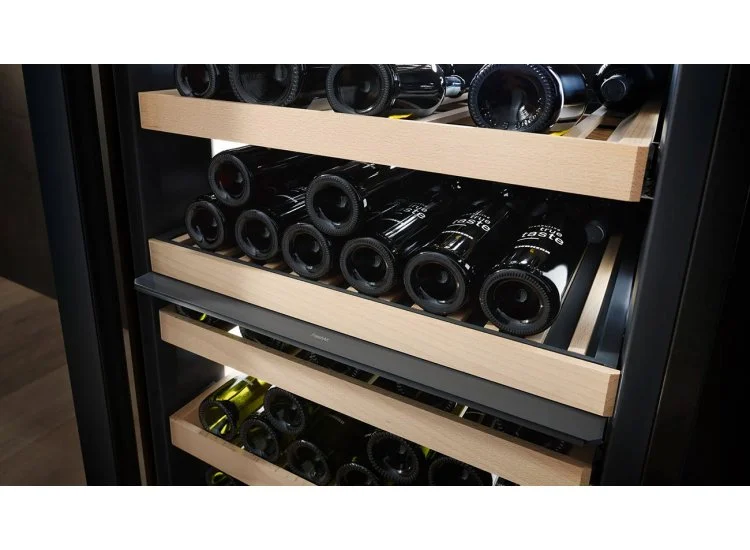
For true wine enthusiasts, proper storage of their collection isn’t a luxury—it’s a necessity. Premium wine coolers from leading manufacturers provide ideal conditions for preserving and aging wine, but how do you choose the right one? In this guide, we’ll examine the leading brands, their key features, and common issues that owners face.
Why Choosing the Right Wine Cooler Matters
Wine is a delicate product that can easily be damaged by improper storage conditions. Temperature fluctuations, high humidity, UV radiation, and vibrations can seriously harm your collection. A quality wine cooler provides:
- Stable temperature (typically 41°F to 68°F)
- Optimal humidity to prevent cork drying
- UV protection through special glass
- Minimal vibration for peaceful aging
- Clean air thanks to charcoal filters
Premium Brand Overview
Thermador — American Luxury and Innovation
Key Features:
- Capacity from 58 to 92 bottles depending on model
- 2-3 independent temperature zones for different wine types
- Diamond-shaped Wenge wood dowels for elegant presentation
- Presenter Shelf — special display shelf for selected bottles
- UV-protected tempered glass
- Auto Door Opening technology — opens with a light push or pull
- SoftClose doors that close smoothly
- Home Connect integration for remote control
- Hidden rails for luxurious appearance
- Adjustable LED lighting
Price Range: $7,099 to $7,599 (18″ and 24″ models)
Ideal For: Those who value American design, technological innovation, and seamless kitchen integration. Thermador is often chosen for its design, smart features, and strong integration into modern kitchens.
Miele — German Precision and Quality
Key Features:
- Capacity from 46 to 80+ bottles
- Up to 3 temperature zones with precise digital control
- FlexiFrame — movable beechwood slats for bottles of any size
- SommelierSet — unique set for cooling glasses and decanting
- BrilliantLight — LED side lighting for beautiful presentation
- Active AirClean Filter — filter with activated charcoal and chitosan
- DynaCool — cold air circulation for even temperature
- Miele@mobile app for remote control
- Push2Open — opens with a light press
- NoteBoard — magnetic strips for bottle labeling
- 3D Presenter Rack for improved collection visibility
Price Range: $3,000 to $10,000+
Ideal For: Perfectionists who value German quality, durability, and attention to detail. Miele is known for reliability—20+ year lifespan with proper maintenance.
Liebherr — Engineering Excellence
Key Features:
- Wide range of models: from 18 to 300+ bottles
- Vinothek, Grand Cru, and Vinidor series for different needs
- Monolith line with premium features
- TempProtect Plus — dual temperature sensors in each zone
- HumiditySelect — humidity adjustment at two levels
- FreshAir activated charcoal filter (replacement reminder every 6 months)
- VibrateSafe — specially developed low-noise compressors
- Solid beechwood shelves
- InfinityLight — adjustable LED side lighting (in Monolith models)
- InfinityBoard — pull-out temporary shelf for convenience
- Glass Touch & Swipe display
- SmartDevice for remote monitoring
Price Range: $4,899 to $10,000+
Ideal For: Serious collectors who need maximum capacity, precise control, and durability. Liebherr is especially good for long-term storage and wine aging.
Sub-Zero — Legend of American Refrigeration
Key Features:
- Dual refrigeration system for precise temperature control
- NASA-developed air purification system
- UV protection
- Connection capability to home security system
- Sealed drawers for freshness preservation
- Water filtration system for clean ice and water
- “Worry-Free” warranty — 2 years on entire appliance, 5 years on sealed system, 12 years limited
- 20+ year lifespan
Price Range: Highest in category (premium segment)
Ideal For: Those ready to invest in the best. Sub-Zero is a status brand with an unmatched reputation in food preservation.
Viking — Professional Power for Home
Key Features:
- 1-3 temperature zones depending on model
- Sharp’s Plasmacluster Ion Air Purifier for air cleaning
- 16 color finish options for customization
- Adjustable Humidity Zone drawers
- Vibration-dampening coating on shelves
Important Note: After acquisition by Middleby in 2013, Viking has faced reliability issues. The service call rate in the first year exceeded 60%, significantly higher than industry average.
Price Range: $6,500 to $8,000+
How to Choose a Wine Cooler: Key Factors
1. Capacity and Size
Plan for the Future: Wine collections tend to grow quickly. Experts recommend buying a cooler at least twice the size of your current collection.
- Small (up to 50 bottles): Suitable for beginning collectors or those keeping wine for daily consumption
- Medium (50-100 bottles): Optimal choice for enthusiasts
- Large (100-200 bottles): For serious collectors
- Extra Large (200+ bottles): Alternative to a wine cellar
Important: Actual capacity is often 20-40% less than advertised, especially if you have non-standard shaped bottles (non-Bordeaux).
2. Number of Temperature Zones
Single Zone: If you store predominantly one type of wine (red or white), one zone is sufficient. Range typically 41-68°F.
Dual Zone: Most popular option. Allows storing red and white wine at optimal temperatures:
- Upper zone (whites and sparkling): 45-55°F
- Lower zone (reds): 55-65°F
Triple Zone: For diverse collections with different storage and serving requirements. Allows simultaneous storage of sparkling, white, and red wines.
3. Installation Type
Built-in: Integrates into kitchen cabinetry, front ventilation. More expensive but aesthetic.
Freestanding: Rear or side ventilation, requires space for air circulation. More affordable.
Under-counter: Compact models 33-35″ height, ideal for kitchens and bars.
Countertop: Miniature models for 2-25 bottles.
4. Cooling Type
Compressor-Based:
- Powerful and stable cooling
- Efficient for large volumes
- Works in wide temperature range
- Can cool to very low temperatures
- More noisy
- Vibrations (though premium brands minimize them)
- Higher energy consumption
Thermoelectric:
- Absolutely silent
- No vibrations
- Eco-friendly (no refrigerants)
- Lower energy consumption
- Less powerful
- Dependent on ambient temperature
- Suitable only for small volumes
For premium collections, compressor systems with vibration-reduction technology are often the preferred choice, especially in higher-end models from brands like Thermador, Miele, and Liebherr.
5. Additional Important Features
UV Protection: Look for doors with UV-protected glass (double or triple glazing). Sunlight can accelerate chemical reactions and spoil wine.
Humidity Control: Optimal humidity 50-70% prevents cork drying. Premium models like Liebherr with HumiditySelect or Miele offer humidity adjustment.
Charcoal Filters: Clean air from odors that can penetrate wine through the cork. Require replacement every 6-12 months.
Adjustable Shelves: Ability to change configuration for different bottle sizes (magnum, champagne).
Locks and Child Safety: Especially important for valuable collections.
Smart Features: Remote monitoring through apps (Thermador Home Connect, Miele@mobile, Liebherr SmartDevice).
Lighting: LED lighting highlights collection but doesn’t emit heat.
Alarm Systems: Alerts about improperly closed door or temperature changes.
6. Noise Level
If the wine cooler is in a living area (kitchen, living room), noise level matters:
- Quiet models: Liebherr (less than 39 dB), Miele (special sound insulation)
- Moderate: Thermador, Sub-Zero (40-42 dB)
- Standard: Most compressor models (42-45 dB)
Common Problems and Solutions
Problem #1: Insufficient Cooling
Symptoms: Interior temperature higher than set, wine is warm.
Possible Causes:
- Power issues — check network connection and circuit breakers
- Faulty thermostat — requires specialist replacement
- External heat sources — cooler installed near oven, radiator, or in sunlight
- Blocked ventilation — check if vents are blocked
- Dirty condenser coils — most common cause; requires cleaning
- Fan problems — fan not spinning or spinning slowly
- Door not closing tightly — check door seal
Solution: Start with simple checks (power, ventilation, door). If problem persists for more than 24-48 hours, contact a specialist. Important: Don’t attempt to repair the cooling system yourself—this can void the warranty.
Problem #2: Unstable Temperature
Symptoms: Temperature fluctuates, doesn’t maintain set level.
Possible Causes:
- Faulty thermostat or temperature sensors
- Damaged door seals
- Frequent door opening
- Cooler overload
- High ambient temperature (above 86°F)
Solution: Check seals, don’t open door frequently, especially during initial loading. For models with TempProtect Plus (Liebherr), the system will alert about critical changes.
Problem #3: Condensation and Frost
Symptoms: Moisture accumulation or frost formation inside.
Possible Causes:
- Interior temperature too high
- Damaged door seals
- Defrost system problems
- Incorrect humidity settings
Solution: Check temperature and humidity settings. Ensure door closes tightly. Check defrost timer and evaporator fan.
Problem #4: Excessive Noise
Symptoms: Unusual or loud noise.
Possible Causes:
- Cooler installed unevenly
- Compressor vibration
- Fan problems
- Dirt accumulation on fan
Solution: Check that cooler is level (use a level). Clean fan from dust. If noise is compressor-related, professional diagnosis is required.
Problem #5: Lighting Malfunction
Symptoms: Light doesn’t turn on.
Possible Causes:
- Burned out bulb/LED
- Wiring problems
- Faulty door switch
Solution: Replace bulb. If doesn’t help, check connections or contact specialist.
Problem #6: Overheating
Symptoms: Cooler hot to touch, surrounding area overheating.
Possible Causes:
- Blocked ventilation
- Faulty compressor
- Insufficient space around cooler
Solution: Ensure vents aren’t blocked. Check if there’s adequate space for heat dissipation. If overheating continues, call specialist—this can be dangerous.
Maintenance and Prevention
Regular Maintenance (every 3-6 months):
- Clean condenser coils — use vacuum or brush
- Replace charcoal filters — follow manufacturer recommendations (typically every 6 months)
- Check door seals — clean with soft cloth, check for damage
- Clean interior surface — use mild detergent
- Check temperature settings — use separate thermometer to verify accuracy
Signs Professional Service is Needed:
- Persistent temperature problems
- Unusual sounds
- Water leaks
- Error codes on display
- Overheating
- Electronic malfunction
Important for New York Residents: Premium appliances require professional service. Inexperienced repair can worsen problems and may affect warranty coverage. Choose experienced, licensed, and insured technicians familiar with premium wine cooler brands.
Brand Comparison Summary
Thermador
Best for: Technology & kitchen integration
Capacity: 58–92 bottles
Zones: 2–3
Price: $$$
Standout features: Auto Door Opening, Presenter Shelf, Home Connect
Miele
Best for: Quality & durability
Capacity: 46–80+ bottles
Zones: Up to 3
Price: $$$–$$$$
Standout features: SommelierSet, FlexiFrame, Miele@mobile
Liebherr
Best for: Capacity & precision
Capacity: 18–300+ bottles
Zones: 2–3
Price: $$$–$$$$
Standout features: TempProtect Plus, InfinityLight, SmartDevice
Sub-Zero
Best for: Prestige & premium preservation
Capacity: Varies by model
Zones: 2
Price: $$$$
Standout features: Dual refrigeration, advanced air purification, long lifespan
Viking
Best for: Professional-style appearance
Capacity: 40–150 bottles
Zones: 1–3
Price: $$$
Standout features: Plasmacluster air purifier, customizable finishes
Budget Recommendations
$3,000 – $5,000:
- Small and medium Miele models
- Liebherr under-counter
- Good choice for beginning collectors
$5,000 – $8,000:
- Thermador 18-24″
- Medium Liebherr models
- Small Sub-Zero models
- Optimal quality-to-features ratio
$8,000 – $15,000:
- Large Liebherr models (100+ bottles)
- Miele MasterCool models
- Medium Sub-Zero models
- For serious collectors
$15,000+:
- Liebherr Monolith
- Large Sub-Zero models
- Customized solutions
- Maximum capabilities and prestige
Frequently Asked Questions
Q: Can you store things other than wine in a wine cooler? A: Yes, many models are suitable for storing spirits, cheeses, chocolate, cigars (with proper humidity settings). Thermador and Miele specifically mention this capability.
Q: What’s the optimal temperature for wine storage? A: For long-term storage—54-57°F. For serving: reds 61-64°F, whites 46-54°F, sparkling 43-46°F. This is why multi-zone models are so popular.
Q: Is special wiring needed? A: Most models work from standard 110-120V outlet, but built-in models may require professional installation with separate circuit breaker.
Q: How long do wine coolers last? A: Premium brands (Miele, Liebherr, Sub-Zero, Thermador) last 15-20+ years with proper maintenance.
Q: What to do when moving? A: Empty cooler, secure shelves, transport vertically. Let stand 24 hours before turning on. For expensive models, use professional movers.
Q: Can you install a wine cooler in a garage? A: Depends on climate. In an unheated New York garage, winter temperatures may drop too low. Check specifications—most models are rated for ambient temperature 50-90°F.
Q: Is additional humidity needed in New York? A: Depends on season. Winter with heating has dry air, summer with AC too. Models with humidity control (Liebherr HumiditySelect, Miele) are especially useful.
Conclusion: Making the Right Choice
Choosing a premium wine cooler is an investment in your collection. When choosing, consider:
- Collection size — buy with room for growth
- Wine types — if diverse collection, need multiple zones
- Installation location — built-in or freestanding
- Budget — but remember quality cooler pays for itself by preserving wine value
- Service availability — in New York, it’s important to choose experienced service providers familiar with premium wine cooler brands
Brand Selection Summary:
- For tech enthusiasts: Thermador — modern smart features, American design
- For perfectionists: Miele — unmatched quality and durability
- For large collections: Liebherr — maximum capacity and precision
- For prestige: Sub-Zero — legendary brand with best reputation
- Consider carefully: Viking models may require closer review of reliability, service history, and parts availability before purchase.
Regardless of chosen brand, regular maintenance is critical. Premium appliances require professional approach—DIY repair attempts can lead to costly breakdowns and warranty loss.
Need help with wine cooler repair or maintenance in New York? Contact experienced, licensed, and insured technicians familiar with premium brands such as Thermador, Miele, Liebherr, and Sub-Zero. Proper maintenance can extend your equipment’s lifespan and help protect your wine collection.